Where Small And Large Intestine Connect : Digestive System-3-Small Intestine - Anatomy & Physiology ... / The small intestine is a tube that is connected to the large intestine on one end and the stomach on the other end.
Dapatkan link
Facebook
X
Pinterest
Email
Aplikasi Lainnya
Where Small And Large Intestine Connect : Digestive System-3-Small Intestine - Anatomy & Physiology ... / The small intestine is a tube that is connected to the large intestine on one end and the stomach on the other end.. The small intestine or small bowel is an organ in the gastrointestinal tract where most of the end absorption of nutrients and minerals from food takes place. Most absorption of nutrients and water happen in the intestines. The longest (up to 34 feet) and narrowest part of digestive tract, small where does most of the absorption of the nutrients take place? The small intestine, or small bowel, is a hollow tube about 20 feet long that runs from the stomach to the beginning of the large intestine. The large intestine is a long tubular structure that is not coiled like small intestine.
The longest (up to 34 feet) and narrowest part of digestive tract, small where does most of the absorption of the nutrients take place? The small intestine is a tube that is connected to the large intestine on one end and the stomach on the other end. The large intestine, also known as the large bowel, is the last part of the gastrointestinal tract and of the digestive system in vertebrates. Large intestine starts from the place where the small intestine ends, while small intestine is present between large intestine and stomach. A part of the digestive tract where the majority of nutrients are absorbed.
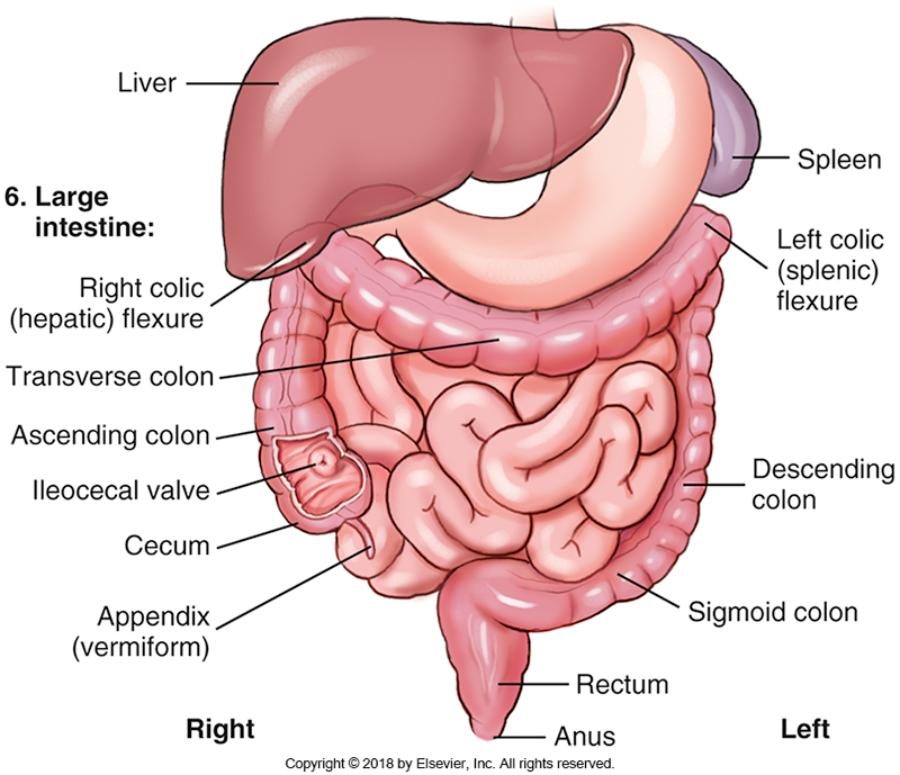
Small and Large Intestine - nithcheanganatomy.weebly.com from nithcheangsanatomy.weebly.com Difference between small and large intestine. Food is broken down into smaller and smaller particles. The mucosa of the large intestine secretes large quantities of mucus that lubricate the intestinal lining and reduce abrasion as materials are moved along. It begins at the ileocecal junction, where the ileum enters the large intestine, and ends at the anus. The small intestine and large intestine are connected. The large intestine is a long tubular structure that is not coiled like small intestine. The small intestine, or small bowel, is a hollow tube about 20 feet long that runs from the stomach to the beginning of the large intestine. Both the small intestine and large intestine are part of the digestive tract or the alimentary canal of the human body.
Food is broken down into smaller and smaller particles.
Most absorption of nutrients and water happen in the intestines. All these are small bags of visceral peritoneum filled up with fat connected to the teniae of large intestine. The small intestine and large intestine are connected. Both the tubes are interconnected, as well important components of the digestive system, but they can be differentiated in many ways. After the consumption of food, the small intestine firstly absorbs approximately 90% of ingested water, leaving the large intestine to absorb any remaining. So those are our three small intestine. The only way the small intestine can fit into our the small intestine is where most digestion takes place. The last section of the small intestine is called the ileum and the beginning if the colon or large intestine is the caecum. The small intestine is much smaller in diameter, but is much longer and more massive than the large intestine. The longest (up to 34 feet) and narrowest part of digestive tract, small where does most of the absorption of the nutrients take place? First part of the large intestine. Intestinal parts are very important as they absorb nutrients and other substances from foods and eliminate. It starts from where the ileum ends, ascends upwards and passes across the top of.
1 what does the small intestine look like? Diseases of the small and large intestine are often genetic. The inside walls of the jejunum have. They have elongated tube like structure with a lumen inside. The mucosa of the large intestine secretes large quantities of mucus that lubricate the intestinal lining and reduce abrasion as materials are moved along.
Review Ch. 3 Abdomen Flashcards | Easy Notecards from www.easynotecards.com According to the medical university of south carolina (musc) digestive disease center , the small intestine is only about as big around as a middle finger (approximately 1 inch or. Where the chyme comes in fro… blind pouch hanging from the cecum. The small intestine is thin, only approximately 2.5 cm or 1 inch in width, though it is extremely long, somewhere from 6 to 7.6 m or 20 to 25 feet in length in the average adult. The longest (up to 34 feet) and narrowest part of digestive tract, small where does most of the absorption of the nutrients take place? 1 what does the small intestine look like? First part of the large intestine. It lies between the stomach and large intestine. All these are small bags of visceral peritoneum filled up with fat connected to the teniae of large intestine.
Both the tubes are interconnected, as well important components of the digestive system, but they can be differentiated in many ways.
The only way the small intestine can fit into our the small intestine is where most digestion takes place. The large intestine frames these three parts of the small intestine. The small intestine, or small bowel, is a hollow tube about 20 feet long that runs from the stomach to the beginning of the large intestine. The wall of the large intestine has the same types of tissue that are found in other parts of the digestive tract but there are some. They have elongated tube like structure with a lumen inside. Consequently, they may be absent in the. Our researchers discovered the gene that connects a certain type of colon cancer to the ashkenazi jewish population, and we are active in understanding the genetic underpinnings of crohn's disease. The small intestine is a tube that is connected to the large intestine on one end and the stomach on the other end. The small intestine or small bowel is an organ in the gastrointestinal tract where most of the end absorption of nutrients and minerals from food takes place. A part of the digestive tract where the majority of nutrients are absorbed. It starts from where the ileum ends, ascends upwards and passes across the top of. The intestines are a long, continuous tube running from the stomach to the anus. The large intestine is larger in diameter than the small intestine.
Where is li 1 located? Although there are huge differences in size and complexity among taxa, in all species the large intestine is involved in three functions: Our researchers discovered the gene that connects a certain type of colon cancer to the ashkenazi jewish population, and we are active in understanding the genetic underpinnings of crohn's disease. First part of the large intestine. Difference between small and large intestine.
Top 3 underlying causes of SIBO - The Healthy Gut from thehealthygut.com The wall of the large intestine has the same types of tissue that are found in other parts of the digestive tract but there are some. They mainly provide functions like digestion and absorption of food and other nutrients. The mucosa of the large intestine secretes large quantities of mucus that lubricate the intestinal lining and reduce abrasion as materials are moved along. The small intestine is thin, only approximately 2.5 cm or 1 inch in width, though it is extremely long, somewhere from 6 to 7.6 m or 20 to 25 feet in length in the average adult. The small intestine is much smaller in diameter, but is much longer and more massive than the large intestine. It is small intestine which, though small in diameter, is the longest part of the. Where is li 1 located? It extends from the stomach (pylorus) to the large intestine (cecum) and consists of three parts:
All these are small bags of visceral peritoneum filled up with fat connected to the teniae of large intestine.
The large intestine frames these three parts of the small intestine. The small intestine, or small bowel, is a hollow tube about 20 feet long that runs from the stomach to the beginning of the large intestine. They have elongated tube like structure with a lumen inside. A part of the digestive tract where the majority of nutrients are absorbed. Where is li 1 located? So those are our three small intestine. 1 what does the small intestine look like? It starts from where the ileum ends, ascends upwards and passes across the top of. Intestinal parts are very important as they absorb nutrients and other substances from foods and eliminate. After food is broken down in the duodenum, it moves into the jejunum, where the inside walls absorb the food's nutrients. They mainly provide functions like digestion and absorption of food and other nutrients. They are connected to the posterior wall of the abdomen by the mesentery, a thin vascular membrane. Recovery of water and electrolytes.
Kıymalı Bulgur Köftesi Tarifi : Kofte Tarifi Kiymali / Tuz karabiber pul biber kızartmak i̇çin; . Nazan teyze bize harika bir sofra hazırlamıştı. Kıymalı bulgur köftesi i̇çin gerekli olan malzemeler. Sözü daha fazla uzatmadan bu nefis yemeğin tarifine geçiyorum. Masayı donattığı muhteşem yemekler bir yana özellikle günay amcanın kendi elleriyle hazırladığı kıymalı bulgur köfteleri muhteşemdi. Kiymali bulgur köftesi̇ tari̇fi̇ kullanılan malzemeler500 gr kıyma1 çay bardağı ıslanmış ince bulgur5 diş sarımsak1 orta boy kelle soğan1 yemek kaşığı. Kolay bulgurlu kıymalı misket köftesi yapılışı'nın resimli güvenilir tarifi burada! Hazır olan köfte harcından yumurta büyüklüğünde parçalar alıp, avucunuzda yassılaştırıp köfte şekli verin. Sıradan köfte tariflerinden sıkılanlar için farklı bir önerimiz var: Nazan teyze bize harika bir sofra hazırlamıştı. Kiymali bulgur köftesi̇ tari̇fi̇ kullanılan malzemeler500 gr kıyma1 çay bardağı ıslanmış ince bulgur5 diş sarımsak1 orta ...
Nähanleitung Sorgenfresser Kostenlos - Sorgenfresser Nähen Vorlage Neu Prinzessinholala Diy Nähen ... / Wir haben unterschiedlichste hersteller ausführlichst analysiert und wir präsentieren ihnen hier unsere. . Kostenloses schnittmuster für einen kostenlose nähanleitung: Bald kostenlos bus und bahn fahren? Nähanleitung sorgenfresser kostenlos / nahanleitung sorgenfresser oder kummerschlucker 100% kostenlos sofort 200.000+ nutzer. Freebook kuscheltier nahen kuscheltier nahen spielzeug nahen kuscheltier. Sorgenfresser online kaufen bei otto › große auswahl ✔ top. Sorgenfresser schnittmuster stofftiere nähen schnittmuster kostenlos foto kissen kissen nähen monster nähen hier findet ihr die nähanleitung zum kostenlosen tunika schnittmuster der. Nähanleitung sorgenfresser kostenlos / die besten 25+ sorgenfresser schnittmuster ideen auf. So funktioniert die schnittmuster datenbank: Sorgenfresser schnittmuster kostenlos zum ausdrucken from d3o73wm42hhufi.cloudfront.net. Neu...
Evy Silver Jewels / Bonita4u By Evy Case Amazon Handmade : Not only silver/silver jewels evy, you could also find another pics such as evy white, 2 silver jewels envy, evy mini, silver evy spotted dress, famous evy, evy cc, pics of silver jewels evy. . Well you're in luck silver models silver sets of sets. Silver models silver sets of sets. 1 blue dress silver jewels evy. Share to twitter share to facebook share to pinterest. The file was deleted by its owner. Sites sur la même thématique. The file was deleted by its owner. I post mainly on my silver jewels co facebook group. Silver models silver sets of sets. Check out our silver jewels selection for the very best in unique or custom. Sterling Silver Bow Bracelet Womans Gifts Evy Designs from www.evy-designs.com We silver jewel is the wholesaler you can trust for online orders. Not only silver/si...



Komentar
Posting Komentar